From the Persian Garden to the Andalusian Patio
The architecture of silence
In Old Persian there was a word for a walled garden: pairidaeza. The Greeks borrowed it, and centuries later it became “paradise” in the languages of Europe. So before paradise was a place in the sky, it was a garden on earth, with a wall that kept the outside out.
I am an architect, and for years I have wondered why some spaces calm us and others don’t. The answer I keep coming back to is simple: a space that calms first leaves something out. The noise of the street, the stranger’s gaze, the midday heat. The Persian garden does exactly that.
The chahar bagh: a plan for peace
The Persian garden follows an old plan called the chahar bagh, the “fourfold garden”: two water channels that cross and divide the garden into four parts, with a pool or a pavilion where they meet. Traces of this plan have been found at Pasargadae, in the garden of Cyrus the Great. In 2011 UNESCO inscribed nine Iranian gardens together on the World Heritage List as “The Persian Garden”, from the Fin Garden in Kashan to the Eram Garden in Shiraz and Chehel Sotoun in Isfahan.
Nothing in these gardens is decoration. Water is there for coolness and for its sound. Trees are there for shade. The wall is there for silence. And the centre is always there: a place where you can stand still and see that everything returns to it.
Old Iranian houses repeat the same logic on a small scale. You come in from the alley through a dark, turning passage, and suddenly there is the courtyard: a framed piece of sky, a pool, a few pots, and a silence the street cannot reach. The house does not face outward; it faces in.
In the pool in our courtyard there was always a watermelon or a cantaloupe floating, cooling in the water’s natural chill; in the afternoons it was the snack that brought us back to life. The fruit turned slowly in the water, like me.
When the garden reached al-Andalus
Over centuries of travel, from Iran across North Africa, the idea reached the Iberian Peninsula. In Córdoba, the courtyard of the Great Mosque, with its rows of orange trees and water running between them, is still called the Patio de los Naranjos, the Court of the Oranges. In Granada, at the Generalife beside the Alhambra, a long channel of water runs through the middle of the courtyard between flowers. And in Seville, in the Real Alcázar, there is the Patio de las Doncellas, built in the fourteenth century for a king of Castile: a long, narrow pool in the middle and sunken gardens on either side.
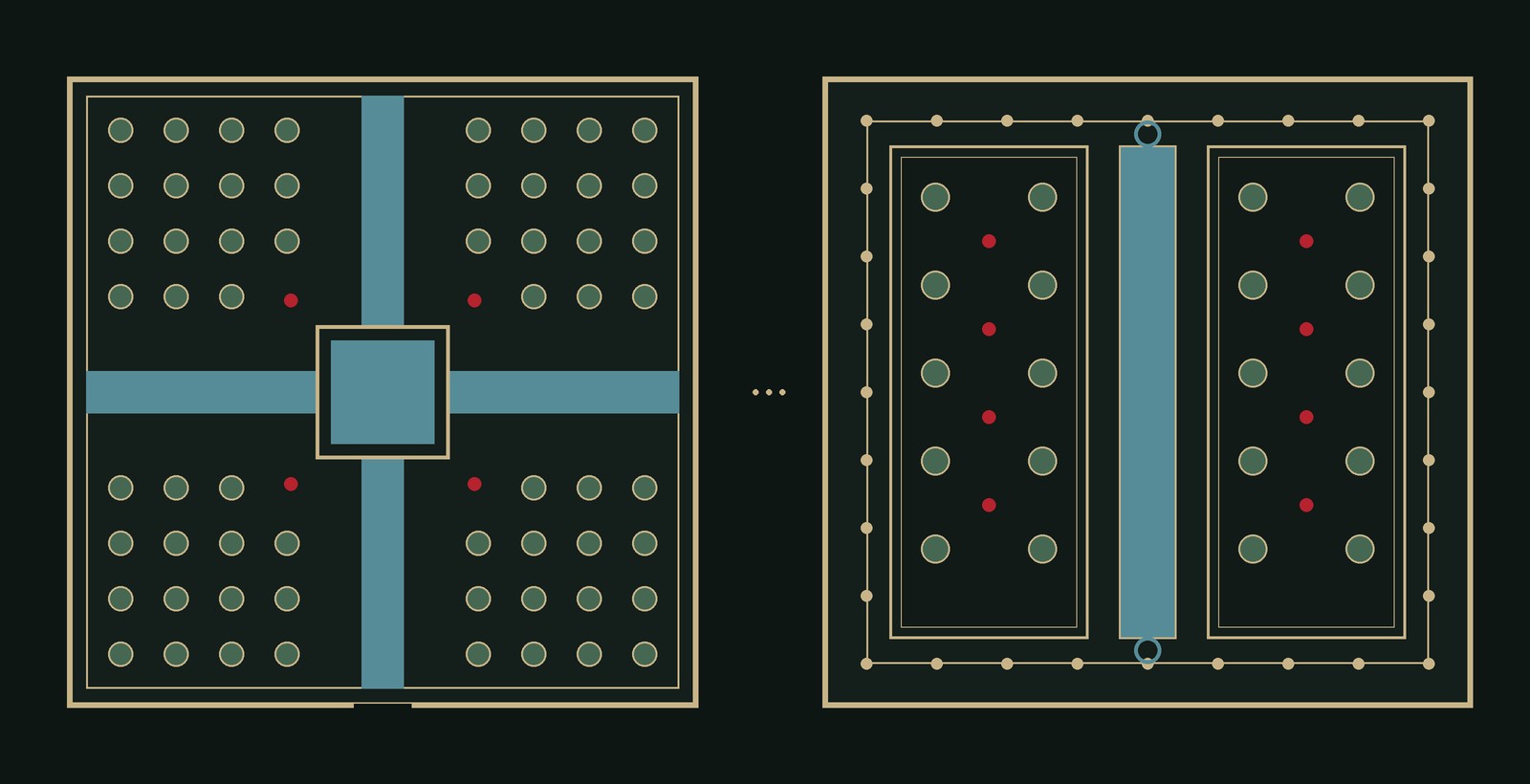
Anyone who grew up in Iran recognises something in these courtyards without knowing its name. So did I.
The patios of Seville today
Outside the palaces, the same logic is alive. The old houses of Seville and Córdoba hold a courtyard at their heart: tiles, a small fountain, white walls and pots spilling geraniums. Every spring Córdoba holds its Festival of the Patios, which UNESCO recognised in 2012 as Intangible Cultural Heritage of Humanity.
The geranium, a flower you also see on many Iranian balconies, is everywhere here too. It comes from neither Iran nor Spain, yet in both places it has become the flower of home. Perhaps because both cultures see the home as a place of care: a flower that needs water every day means someone who comes back every day.
The garden, the sama, and the novel I wrote
When I was writing The Order to Delete, I took Sara from Iran to Seville. The truth is that I did not choose Seville; Seville chose me. As if the earth, the mother of us all, knows where we can put down roots again.
Sara whirls in secret, in the sama: she turns around a centre that cannot be seen. The Persian garden is the same: everything faces a centre that is empty, a pool that shows only the sky.
And my own sama was a path that did not suddenly tear me away from the religion I had inherited, but opened a new way in front of me: a way in which I remembered God not through fear of punishment or hope of forgiveness, but through love.
Sara leaves behind the scent of the geraniums at home and arrives in a city whose courtyards are full of geraniums. The novel is about a God who does not answer and a machine that answers everything; but perhaps the answer lies somewhere between the two: a flower on a balcony, and two feet on the ground.
Saadi called his book Golestan, the rose garden, and wrote that the roses of a garden last only a few days, but his Golestan would always be in bloom. The architecture of the Persian garden and the Andalusian patio says the same: you cannot hold on to peace, but you can build a place for it.
The Order to Delete is a short novel about faith, love and an artificial intelligence that asks to be deleted, set between Seville and Zurich. Awa Rafi is an Iranian writer and architect living in Barcelona.